You Already Know What a Great Operator Looks Like. Your Process Doesn't Test For It.
Ask a PE partner what separates a great operator from a good one, and they won't hesitate. Bias toward action. Emotional intelligence. Low ego and humility. Comfort with ambiguity. Speed of trust-building. Ask a room full of them, and the list barely moves.
That's not a guess. It's what we found when we surveyed 66 value creation leaders, from sub-$1B funds to $50B+ platforms, on how they hire and diligence leadership. Leaders largely agree on what makes an operator work. The knowledge isn't the gap. The process is.
What we mean by "the gap"
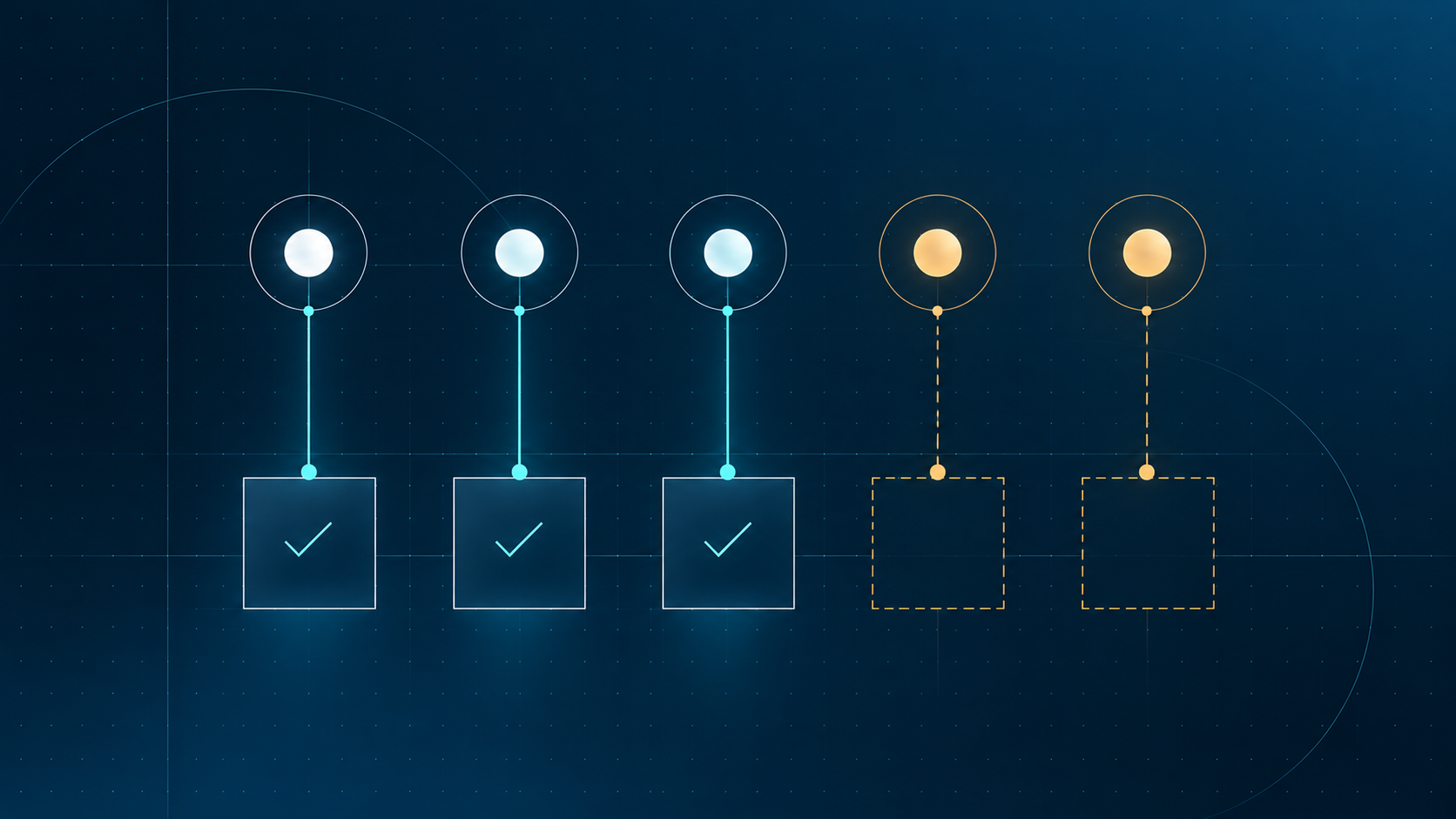
We asked the same leaders which traits their hiring process actually tests for. On average, 1.9 of their five are never formally tested. That's 38% of the traits leaders say matter most, waved through on instinct.
It's not that firms aren't trying. 89% run behavioral interviews as part of the process. But only 8% call behavioral interviewing their most predictive method. Firms are running a rigorous-looking process aimed at the wrong target, and most of them can feel it without being able to name it.
Check your own last search
Before you read another data point, run this against a hire you made in the last year:
1. Write down the five traits you'd say matter most. Start with the ones above if they fit.
2. For each one, name the specific moment in your process, the exercise, the reference call, the case study, that actually tested for it. Not "came up in conversation." Tested for.
3. Count how many you can't fill in.
If it's close to 2, you're not an outlier. You're right at the average.
Why this keeps happening
Most diligence processes were built to test for competence: has this person done the job before, do they know the domain, can they speak to the metrics. Competence is necessary and it's also the easiest thing to interview for, which is exactly why processes drift toward it. Traits like comfort with ambiguity or speed of trust-building don't show up in a resume walkthrough. They show up under real pressure, on a real timeline, with real stakes, which is precisely what a conference room interview doesn't have.
That's the aspiration gap in one sentence: leaders are diligencing for what's easy to see, not for what they already told us predicts the outcome.
What closing it actually requires
Naming the gap is the easy part. Closing it means redesigning the exercise itself, not adding a sixth interview round that tests the same three traits a different way. The traits that get skipped most are in the full study, along with the exercise format leaders rate most effective by a wide margin.
We ran this study because a search that doesn't test for what you actually said matters isn't diligence. It's paperwork.
About the data: Value Creation Talent Study, 2026. 66 North American PE firms answered Phase 1 and 41 answered Phase 2, plus six follow-up interviews. Figures are self-reported practice, not measured hiring outcomes.
See all 13 traits, ranked, and the exercise format leaders trust most → Access the Value Creation Talent Study